6.12.26 Tredas Weekly Recap
Jul26 Corn down 5 at $4.125
Jul26 Beans down 8 at $11.135
Jul26 Chi Wheat up 4.5 at $5.845
Jul26 KC Wheat up 14 at $6.345
Jul26 Cotton down 240 points at $0.7375/lb
July26 Hogs down $1.40 at $97.45
June26 Fats down $0.20 to $249.875
Aug26 Feeders up $3.525 to $357.425
Dec26 Corn down 6 at $4.4025
Nov26 Beans down 5.5 at $11.32
Sep26 Chi Wheat up 3 at $5.9575
Sep26 KC Wheat up 9 at $6.4075
Dec26 Cotton down 106 points at $0.7642/lb
Grains:
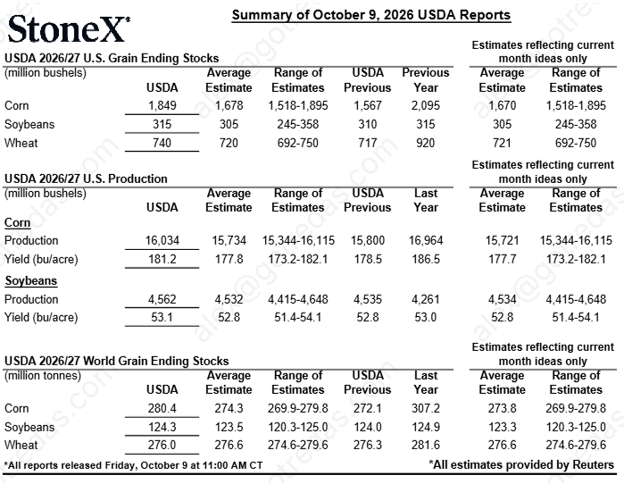
Selling pressure in grains continues with a lower weekly close in corn and beans. Old and new crop corn both made new contract lows today with bean 20-50 cents away from the next major chart support levels. The USDA report yesterday did not have any positive news as ending stocks and world production remain adequate in all three major crops. Funds continue to reduce long positions with the net short in wheat growing as we head into harvest. Seasonally corn and beans start to work lower over the next couple of months as we start to get closer to harvest unless we see an issue with growing conditions, which are not present today. A good example of this is shown in the implied volatility charts below, which look very similar to the seasonal price trends. It’s unusual to see lows set in June so there is potential for more downside that could take us back near last year’s lows to find support, but we have seen a significant correction so maybe the worst is behind us. The general market landscape is more positive than the last two years with biofuel demand increasing and hopes that China does commit to the trade agreement and we see new purchases later this year. We’ll continue to use weakness to reposition in line with your marketing plan and wait for strength to make new sales.

Key Market Drivers on the Horizon
This chart below is the Green Markets Fertilizer Index. It’s a blend of the N, P, and K pricing. The big picture story is that the index is back withing $50 of the last numbers available before the war with Iran started and prices took off. While the Strait of Hormuz has been effectively closed there has been some ship movement in the area that skips the strait and hits outlets on the south side of the Arabian Peninsula. This is also the time of year that fertilizer prices seasonally decline as the north American rush for products draws to a close. All eyes will be on how this affects supplies for the southern hemisphere growing seasons as fall nears.

Livestock:
Cattle has their first higher weekly close in 3 weeks despite some selling today to end the week. We saw some early week selling as uncertainty remains around screw worm with more cases being discovered in Texas. Late week strength developed as cash prices remain steady to slightly higher in most areas. This week’s rebound put futures roughly back in the middle of the range from last months contract high to last week’s low on both live and feeder cattle so next weeks movement will be important for longer term direction.
Weather: The forecasts continue to call for widespread rain the next 2 weeks across the Midwest and south. Many areas could use a break from the rain with excessive water causing crop stress and damage to low lying areas. Drought in most areas of the US will be completely erased or significantly reduced after this week.

Economy:
The U.S CPI released this week was 4.2% higher year over year, with most of the increase coming from energy (Iran war), food, and services. Whatever the category we’re paying more for just about everything. The chart below is the actual CPI reading for every month since January 1997. The peak CPI reading through 2008 was about 220, the post pandemic reading was around 260, and the current level is 335. That’s a 30% increase in prices in 5 year. This means if you spent $50,000 to get through normal life expenses in a year, those same expenses now cost $65,000. Easy to see why we all feel squeezed.

Today’s US rig count below shows current numbers for crude oil and natural gas compared to the last year and the 5 year historical. The North American total rig count remains near the 5 year average with oil prices roughly $2 above the 5 year average this week after continuing to drift lower on hopes of a peace deal with Iran. The timeline for a deal is still unclear and subject to change as we’ve seen, but some accounts suggest that it could be early next week.

Something That Probably Means Nothing:
Washington state has the highest average corn yield of any state in the US, averaging 251 bushels in 2025. The high desert climate, rich volcanic soils and heavily controlled irrigation make ideal growing conditions. They also rank #1 in the US for sweetcorn production, producing 16,376,000 CWT last year with an estimated value of $83,395,000.
Quote of the Week:
“Plans are of little importance, but planning is essential.” – Winston Churchill
Have a great weekend


Comments