8.7.26 Tredas Weekly Recap
- 16 hours ago
- 4 min read
Weekly Action:
Sep26 Corn down 5.75 to $4.39
Sep26 Beans down 25 to $11.59
Sep26 Chi Wheat down 43 to $6.3975
Sep26 KC Wheat down 18 to $7.14
Oct26 Cotton up 618 points at $0.8322/lb
Aug26 Hogs down $6.00 to $95.50
Aug26 Fats up $6.30 at $231.70
Aug26 Feeders up $6.00 at $351.65
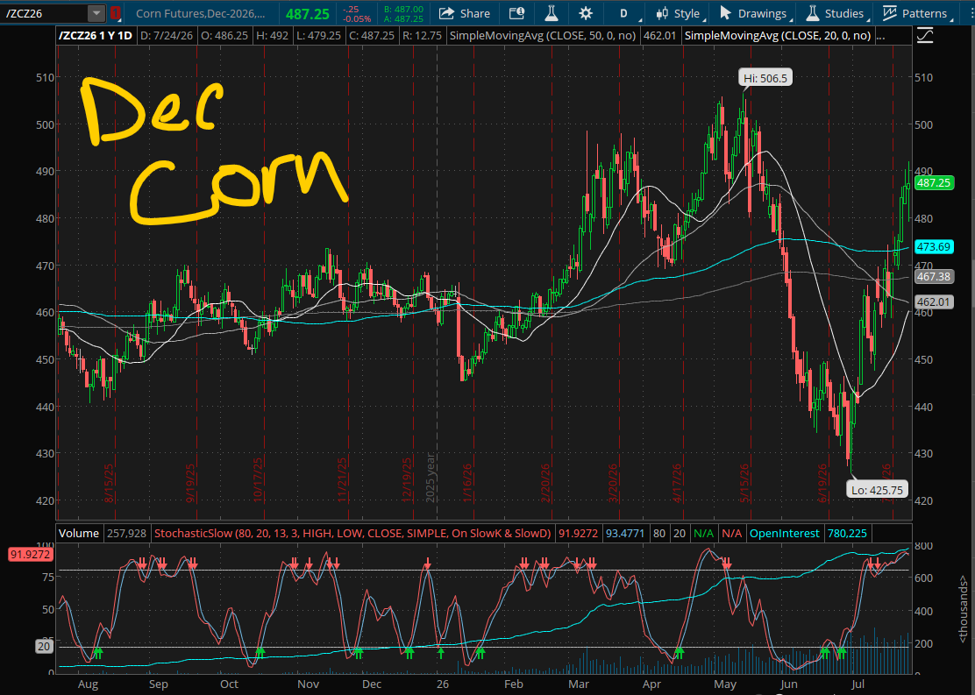
Dec26 Corn down 5.5 to $4.62
Nov26 Beans down 27 to $11.7625
July27 Chi Wheat down 33 to $6.8325
Jul27 KC Wheat down 12.25 to $7.465
Dec26 Cotton up 577 points at $0.8440/lb
Grains:
Corn conditions dropped another 2% on Monday to 61% good/excellent due to dryness in the western corn belt continuing to stress crops. Last year at this time the corn crop was rated 73% good/excellent and this year’s crop ratings are below both the 5 and 10 year average. Soybean conditions were steady at 63% as rains helped improve the crop potential especially in the central and eastern corn belt. Soybeans were rated 69% good/excellent last year and remain above the 5 year average and right at the 10 year currently. US weekly export sales for the last week of July were 10.9 mil bu of wheat, 4.6 mil bu of old and 40.4 mil bu of new crop corn, and 1.2 mil bu of old and 33.2 mil bu of new crop soybeans. The old crop sales were disappointing as we near the end of 2025 marketing year. China continues to be the primary buyer of US beans with an estimated 4-6 MMTs of new crop purchased so far towards the stated agreement of 25 MMTs. The US Senate Ag Committee could not advance the 2026 Farm Bill with Democrats voting no due to cutbacks in the SNAP food program. The bill will have another chance in September when Congress returns from its 5 week break but could face more opposition ahead of the midterm elections.
France forecast a 35% drop in its corn crop to just 9 MMT which would be the smallest harvest since 1980 after extreme drought battered crops this summer. Just 31% of their corn crop is rated good/excellent with 42% rated poor/very poor. Both Russia and Ukraine continue to intensify their attacks on each other’s grain infrastructure, specifically their seaports. The Azov Sea, Kerch Straight, and NOVO are closed for grain exports in Russia, while Ukraine is facing damage to at least 40% of its grain export capacity that can’t be repaired until the war ends. Ukraine lowered its export forecast for this year by 9 MMTs and Russian wheat exports are forecast to be down 13 MMTs if the war continues into next year.


Next Wednesday August 12th we will get the USDA report that could see revisions to planted acres and yield and is highly anticipated to access the size of this year’s crop and carryover. Expect volatility around the report that will be followed by the Pro Farmer Crop Tour Aug 17-21. The Trade Estimates for next week’s report are below.

Livestock:
The cattle complex found some footing this week and rallied into Wednesday with feeder cattle reaching their 20 day moving average and live cattle almost touching their 50 day moving average. Yesterday saw a sharp decline in prices for both, followed by additional selling today to close out the week. Today is option expiration for August live cattle with August feeder options expiring on 8.27. The cash trade on cattle has improved this week with the feeder index up another $4.43 this morning to $357.36, almost $8 above current August futures. Live cattle sales in the north were $3-4 higher for the week at $235-236 and dressed trade up $8-13 at $370-375. Both should be supportive to futures prices from a fundamental perspective.


Weather: The weather pattern has shifted cooler with improved rain chances for most of the Midwest. Areas of the western corn belt continue to struggle insufficient moisture, while the I-states should see near-ideal conditions. Corn may be too far along for a lot of improvement at this point but beans will greatly benefit from these August rains.


Economy:
The U.S. nonfarm payrolls unexpectedly dropped in July, falling 23,000 vs expectations for an increase of 83,000. The decline was lead by a loss of 53,000 government jobs and weakness in retail, leisure and hospitality, and a slower than normal growth in healthcare. The unemployment rate edged lower to 4.1% due to a further decline in those holding jobs or looking for work. Worker pay was nearly flat last month with the yearly increase in average hourly earnings slipping to 3.2%, the lowest since May of 2021. The U.S. dollar held steady this week while world copper prices reached a record high on expanding worldwide economic activity. The UN reported that world food prices reached a 3 year high in July as war and adverse weather pushed food prices higher. The food index gained 3.4% with help from world wheat prices jumping 5.8% on a 50 MMT fall in world wheat supplies.
Something That Probably Means Nothing:
What a time to be in Italy:
Mount Etna erupted again, sending an ash cloud drifting over the Italian island of Sicily and forcing flight restrictions at Catania Airport. Italy this week also placed all 27 of its major cities from Trieste in the north to Palermo in the south under the highest heat alert as the fourth heatwave to hit the country this summer intensifies.
Quote of the Week:
"If you are positive, you will see opportunities instead of obstacles." — Widad Akrawi
Have a great weekend!


Comments