10.16.26 Tredas Weekly Recap
Weekly Action:
Dec26 Corn down 6.25 at $4.7425
Nov26 Beans down 31.5 at $12.6125
Dec26 Chi Wheat down 10.25 at $6.605
Dec26 KC Wheat down 15.25 at $7.04
Dec26 Cotton down 50 points at $0.8/lb
Dec26 Hogs down $0.825 at $66.925
Oct26 Fats up $2.8 to $227.55
Oct26 Feeders down $0.2 at $343.625
Dec27 Corn down 5 at $5.0675
Nov27 Beans down 23 at $12.4075
Jul27 Chi Wheat down 12 at $6.8325
Jul27 KC Wheat down 15 at $7.2175
Dec27 Cotton up 39 points to $0.79/lb
Grains:
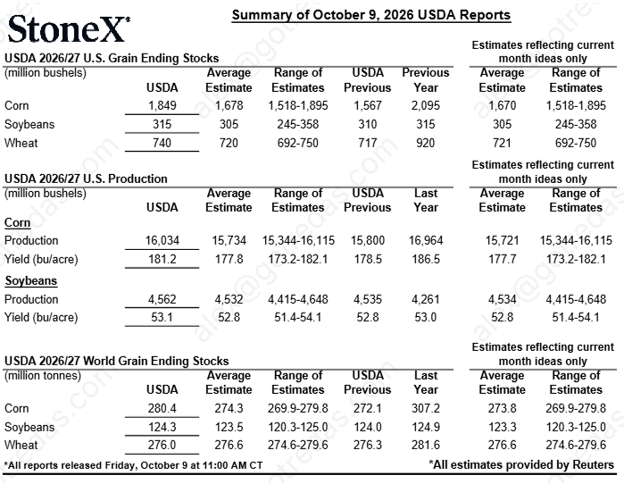
Continued market digestion of the October WASDE led to a troubled week of trade for the grains. Through the end of trade on Friday, December corn broke through the 200-day moving average and settled just south of $4.75, while November soybeans slid through the 50-day moving average and traded around $12.60 most of the day.
Yield checks across the Western corn belt have been disappointing, despite the USDA’s 11bpa bump to Nebraska corn production in the most recent WASDE. As corn harvest starts churning, Western NE basis has firmed in response. Kearney-area ethanol plants firmed bids by 5c this week, and flash-bids for 2-5 day delivery corn popped up across the state. With the delayed harvest, basis could continue to firm in the near-term until harvest focus fully switches to corn.
Soybean basis has slid further this week, with +$1.00 basis premiums nowhere to be seen, and harvest basis slipping to new lows on the year. Deferred bids are incentivizing carrying bushels in a cash market, with ADM Lincoln posted -40X for Oct delivery, -15X for FH Nov, and -5X for LH November. December bids moved to -20F, which at current futures is a wash compared to LH November. Yield checks on soybeans have been pleasing with later maturity bean varieties. Group 2 beans across the state seemed to suffer, where later group 3’s have seemed to benefit from the influx of moisture we had received over the last 3 weeks.
Wheat futures continued their downward-trending trade, as well. Despite the ongoing conflict in Ukraine, world wheat prices have remained relatively stable. With escalations in the conflict ongoing, it is unclear what type of export program either Russia or Ukraine will have to supplement a shrinking world wheat carryout, and it’s almost harder to predict. Indicators show extreme weakness in nearby and deferred wheat futures.
Livestock:
Cattle futures spent most of the week consolidating before surging to the highs of the most recent move on Thursday, followed by a mildly up day of trade on Friday. Cash trade was slower this week as feedlots held out for higher money. Packers appear to be needed to step in to help refill inventories with slaughter continuing to run at a brisk pace.
The USDA’s phased reopening of southern ports to Mexican cattle continues with Douglas, AZ opening the port doors on August 24, and Santa Teresa, NM reopening September 24. Columbus, NM is next in line, but two new screwworm cases were confirmed Thursday in Grant County, NM. One case in a calf and another in a horse, so no reopening date has been announced in lieu of this news.
Hogs continue to struggle as seasonal pork demand falls following the near end of grilling season. Pork values remain under pressure and cash trade has been choppy, though hog futures managed a modest bounce off the recent lows on Thursday, followed by a relatively quiet day of trade on Friday.
Weather:
Make sure your Little Buddy heaters are ready to rock, as the 10-day NDFD Temp forecast is calling for some lower temps than average across the Western Plains/Corn Belt (via ag-wx.com)

The latest run of the GFS-10 day precip forecast shows diminishing chances for much of the corn belt, with slight precipitation expected across NE into eastern/central IA (via AgResource Commentary)

Economy:
The Strait of Hormuz is still the story this week, as WTI Crude Oil surged ~$9 a barrel to north of $100 on the nearby November contract, behind a large draw in US crude inventories tied to hurricane shut-ins. Hormuz flows averaged 11.62 million bpd for the week through 10/13, about 68% of the 17.15 million baseline. Iran states they will be stepping up strikes in response to the US blockade and much tougher sanctions. The International Energy Agency agreed to release 20+ million barrels of diesel and in the same breath warned that diesel constraints could run well into next year, with the Farm Bureau forecasting record fuel expenses of $22 billion in 2026, up 29%.
On the inflation front, September CPI jumped to 3.7% year over year, up from 3.4% in August, with gasoline up 9.1% on the month. October rate-hike odds jumped after the report, following the Fed’s mid-September hike to 3.75-4%. Fed Chair Kevin Warsh stayed vague on his next move, leaving the market waiting for the October 27-28 meeting after the September jobs report added just 29,000 jobs. September retail sales data released on 10/15 were stronger than expected. Retail sales jumped roughly 0.8% month-over-month suggesting that US households continue to spend despite elevated prices and higher borrowing costs.
Something That Probably Means Nothing:
With Halloween just over two weeks away, the cost of the holiday’s classic centerpiece keeps climbing. The average run-of-the-mill pumpkin will cost you around $6 this year, up from about $4 in 2020, as growers deal with lower yields and higher diesel costs. Pumpkin farmers in Texas say extreme heat nearly wiped out their crop, though Illinois, the nation’s top pumpkin producer, still had a decent year overall. On top of the pricier pumpkins, a 100-count bag of candy costs roughly 70% more today than that same bag cost in 2021. The National Retail Federation expects Americans to spend about $13.5 billion through the Halloween season this year.
Quote of the Week:
“Be fearful when others are greedy and be greedy when others are fearful.” – Warren Buffett.
Have a great weekend!


Comments