10.9.26 Tredas Weekly Recap
Weekly Action:
Dec26 Corn down 17.25 to $4.8050
Nov26 Beans up 14.0 to $12.9275
Dec26 KC Wheat down 16.0 to $7.1925
Dec26 Cotton up 162 points to $0.8050/lb
Oct26 Hogs down $2.2725 at $75.150
Oct26 Fats up $5.800 at $224.750
Oct26 Feeders up $9.200 at $343.825
Dec27 Corn down 4.75 to $5.1175
Nov27 Beans up 10.5 to $12.6375
Jul27 KC Wheat down 13.0 to $7.3675
Dec27 Cotton up 189 points to $0.7861/lb
Grains:
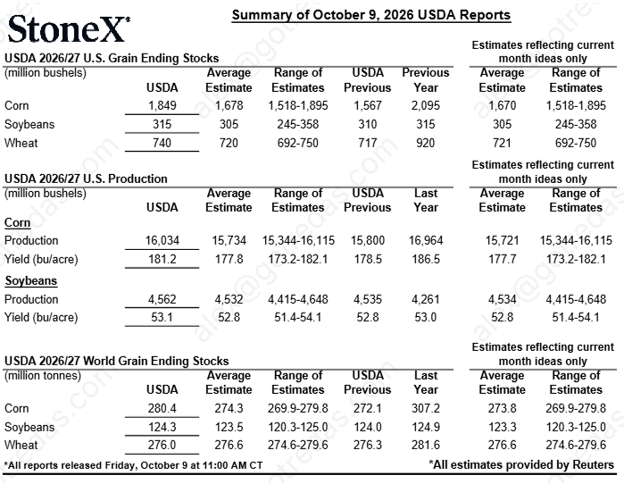
Corn and soybean trade was relatively choppy this week as the market positioned ahead of Friday’s October USDA WASDE and Crop Production reports. December corn hovered $5.00 futures, while November soybeans traded near $12.90–$13.00 heading into the 11am report. Harvest progress, questions surrounding USDA’s previous corn usage estimates, and continued Chinese uncertainty remained key factors influencing trade. The biggest event of the week was today’s USDA report, which delivered a more bearish supply outlook for corn and a modestly larger soybean crop.
Corn: USDA raised its national corn yield estimate to 181.2 bushels per acre, up from 178.5 in September and well above the trade estimate of approximately 177.8. Total production was increased to 16.034 billion bushels, while projected 2026/27 ending stocks climbed to 1.849 billion bushels, up from 1.567 billion last month. The increase in beginning stocks, reflecting September’s larger-than-expected Grain Stocks report, added to the supply outlook. USDA also increased its feed and residual usage estimate for the new crop year slightly, but the overall balance sheet still points to more available corn than the market had anticipated. The larger crop and stocks figures put pressure on the market’s ability to sustain a rally without stronger demand or evidence that actual yields fall short of USDA’s projections.
Soybeans: The soybean section of the report was more balanced, although the production increase adds another layer of supply pressure. USDA raised its yield estimate to 53.1 bushels per acre, compared with 52.8 last month, lifting production to 4.562 billion bushels. However, projected ending stocks increased only modestly, from 310 million to 315 million bushels, as USDA also raised its export forecast by 10 million bushels. Soybeans remain in a different position than corn, with export demand and the pace of Chinese purchases especially important to the outlook. A larger U.S. crop will be difficult to offset without improved demand, but continued export business and South American weather remain factors worth watching.

Livestock:
USDA’s plan to resume Mexican feeder cattle imports rattled markets in late July, but the data so far suggests the impact is limited.
First, resuming trade hasn’t driven more screwworm infestations in Texas. Cases fell from 14 in July to 4 in August, 3 in September, and 1 in October. Only 2 remain active, confined to southern Texas, away from the Panhandle’s dense cattle areas. Second, there’s been no flood of cattle. Douglas, AZ entries since August 24 total 24,650 head versus 25,350 in 2024. Projected year-end volume is about 55,000-60,000 head. Third, Santa Teresa, NM, which handled over 40% of pre-suspension imports, will likely stay limited because only Chihuahua cattle are allowed. Expect roughly 40,000-50,000 head through year-end, far below pre-2024 levels.
Weather:
The next 10 days look generally favorable for harvest across much of the Corn Belt, with a stretch of warmer, mostly dry weather expected through early next week. The central and eastern Corn Belt should see a cooler push behind a front around Tuesday, October 13, bringing some chances for scattered rain. Later next week, another system is expected to move out of the West and into the Plains, potentially bringing a broader area of rainfall eastward.
Hurricane Isaias is expected to impact the Gulf Coast and Southeast, with heavy rain and flooding concerns, but the most significant impacts should remain well south and east of the main Corn Belt. Its broader moisture pattern could contribute to weather changes farther north later in the period, although the extent and timing remain uncertain.
Overall, the near-term forecast offers a favorable harvest window for many areas, but rain chances may increase late next week as the next system develops.

Economy:
The average interest rate on the most common U.S. home loan jumped last week to its highest level in nearly three years, adding further pressure to housing affordability.
The average 30-year fixed-rate mortgage rose 19 basis points to 7.49% for the week ending Oct. 2, according to the Mortgage Bankers Association. That was the highest rate since November 2023.
Mortgage rates closely follow the yield on the 10-year U.S. Treasury note, which recently climbed above 5.3%, driven by concerns over inflation, higher oil prices, and stronger-than-expected economic growth.
Higher borrowing costs are already weighing on housing demand. Mortgage applications fell 4.2% last week, while refinancing activity dropped sharply. MBA Deputy Chief Economist Joel Kan said the combination of higher rates and limited refinancing opportunities is causing potential buyers to step back from the market.
Inflation also remains a concern, running at 3.4% in August, above the Federal Reserve’s 2% target. Fed policymakers have indicated another rate increase could come before the end of the year, although markets currently expect the Fed to leave rates unchanged at its upcoming late-October meeting.
Overall, the combination of elevated Treasury yields, persistent inflation, and higher mortgage rates continues to put pressure on both housing affordability and demand.
Something That Probably Means Nothing:
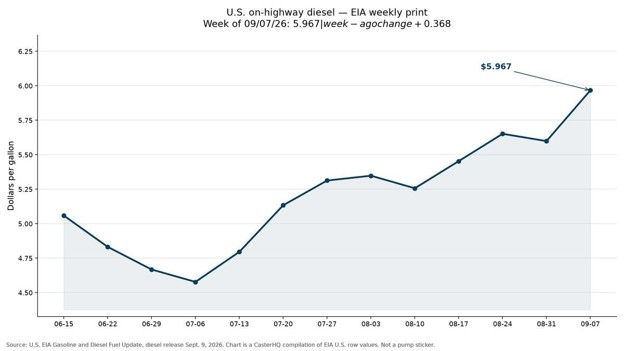
President Trump’s new executive order provides some timely relief as harvest gets underway. The order temporarily allows red-dyed diesel to be used on highways through the end of 2026 while deferring the federal diesel tax and providing penalty relief. The federal tax is 24.4 cents per gallon, meaning the potential savings can add up quickly for producers during harvest. The important caveat is that state rules still matter, so producers should confirm how the exemption applies where they operate and haul.
Diesel has dropped 33 cents per gallon from the recent high, but remains $2.49 per gallon above the year-ago level. In the Midwest, the latest average was $6.286 per gallon.
Quote of the Week:
“There are two pains in life. There is the pain of discipline and the pain of disappointment. If you can handle the pain of discipline, then you’ll never have to deal with the pain of disappointment.” – Nick Saban Theres a new ESPN docuseries - SABAN – that just premiered on October 8th that takes a deep dive into the life, career, and mindset of Nick Saban, widely considered one of the greatest college football coaches of all time. The six-part series features never-before-seen footage and interviews with more than 70 people, including former players, coaches, and his wife, Miss Terry. Beyond his seven national championships, it explores the discipline, leadership, relationships, and famous “Process” that helped build his success at Alabama and LSU.
Have a great weekend!


Comments