10.2.26 Tredas Weekly Recap
Weekly Action:
Dec26 Corn down 30.5 to $4.9775
Nov26 Beans down 40.75 to $12.7825
Dec26 Chi Wheat down 20.25 to $6.83
Dec26 KC Wheat down 26.75 to $7.3525
Dec26 Cotton down 383 points to $0.7888/lb
Oct26 Hogs down $0.35 at $77.875
Oct26 Fats down $0.025 at $218.85
Oct26 Feeders down $0.30 at $334.625
Dec27 Corn down 11.5 to $5.165
Nov27 Beans down 23.5 to $12.5325
Jul27 Chi Wheat down 20.75 to $7.0475
Jul27 KC Wheat down 24.75 to $7.4975
Dec27 Cotton down 267 points to $0.7672/lb
Grains:
Harvest progress is at a standstill in the upper midwest with heavy rain again this week making it impossible to get in the field. Nationally however harvest is moving along near average with the south enjoying an open window. As of Sunday corn is 18% harvested which is right at the 5 year average and soybeans are at 17% harvested which also matches their 5 year average. The weather forecast for the next two weeks shows dry weather and warm temperatures which should allow for harvest to gain speed across the country. Due to the slow harvest so far, basis levels remain strong especially on soybeans so if you are able to get in the field and can hit some of the nearby shipment windows it will pay to be proactive on getting those locked in. Premiums will slip on the front end but overall should remain strong as demand works to keep supply moving. With all the wet weather there is talk of quality concerns that could show up as harvest gets going. If you see any issues or start noticing docks on your scale tickets please communicate that with us so we can deal with it as soon as possible and make a plan. This may mean getting an adjuster to look at the field and working with your crop insurance coverage or adjusting to a destination who is able to handle it. If you wait to deal with it until after it’s in the bin that can be too late for claims in some cases so don’t wait to say something.
The USDA Grain Stocks report released Wednesday turned out to be a bearish surprise for corn with 2025 ending stocks coming in 177 million bushels above the trade estimate and 544 million above last year. Soybeans were slightly positive with stocks 9 million below the average estimate and 10 million below last year. Wheat numbers were also supportive coming in 26 million below the estimates and a sizable 288 million drop from last year. Corn saw a sharp drop in price Wednesday that has taken December futures back below $5 with beans and wheat following to the downside. Both Chicago and KC wheat sit at their respective 100 day moving average support levels. December corn is 14 cents above it’s 100 day moving average and November beans are 20 cents above theirs which they could test in the coming weeks.

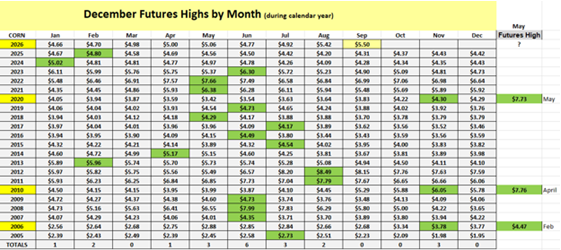
With the drop in grain prices this week it’s good to step back and get some perspective on where we’re at. Seasonally we know grain prices tend to rally in the spring with highs set in May and June most commonly. Rallies after the 4th of July are more rare but do happen and we normally refer to those as counter seasonal rallies. This is what we’ve had so far this year with a high set in May, but new highs now made in September on the recent rally. Looking at the chart below of the last 20 years 3 years stand out as years where we had big counter seasonal rallies in corn and all three of those years saw the rally continue to new highs the following spring between February and May. Will this year be the same, we don’t know yet, but looking at the chart it’s statistically unlikely to set highs in September and October.
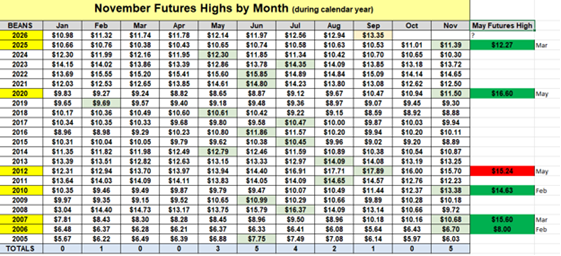
Soybeans, similar to corn, seasonally tend to make highs in May – August, with that happening in 14 of the last 20 years. There were 5 times the high was in November and there is a recent trend for prices to rise into Jan-Feb correlating with the South American growing season. The high so far this year for beans has also been set in September at $13.35 November futures. When you look at the following May contract for the 6 years that November futures scored late season highs, five of those years saw the rally continue into next spring with highs set between February and May.
There remains a lot of volatility with war headlines, trade negotiations, yield uncertainty, and midterms with funds already very long. Stick to a plan and make sure you keep downside protection in place and reward rallies when you get to profitable levels in line with your farms operating needs.
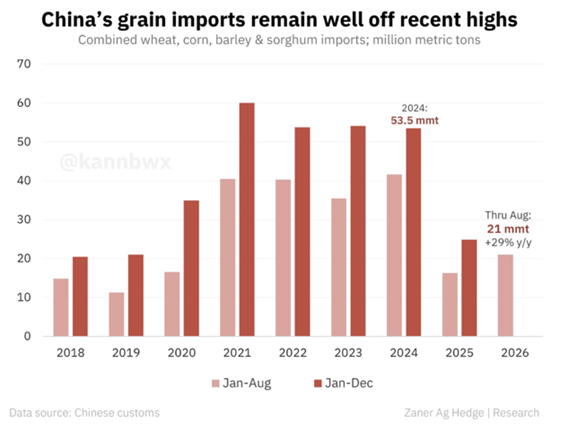
Will China buy US corn? We know they’ve committed to buying 25 MMT of US beans this year through 2029 and the market has that figured into balance sheets. The Whitehouse agreement from last week has many thinking China will buy corn, wheat, or sorghum as some point but the chart below shows they’ve been slowing down in recent years so we’ll see if that changes.
Livestock:
Cattle futures have trended up this week on feeders with November gaining $2 yesterday to close above the 100 day moving average for the first time since June. The feeder index this morning was down $2.13 at $336.84 which is about $2.20 above October’s closing price. Live cattle have seen modest gains with December closing at a 2 week high yesterday. Today’s drop in futures have erased most of this weeks gains unfortunately as cattle struggle to maintain upside momentum. Negotiated fed cattle trade in the north Thursday was down $2 at $220 and dressed trade was also $2 lower at $345. The USDA has not reported TX sales since late June and KS sales have not been reported since early August leaving the reporting to private sources. Steer carcass weights averaged 979 lbs which is the highest since April and 12 lbs higher than last year.
Weather:
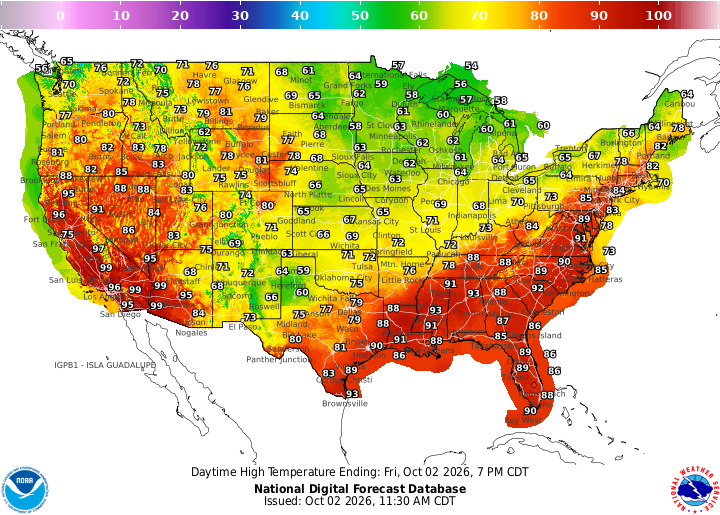
The rain has passed for the Midwest but may move into the south and cause some delays there, though they’re generally ahead of schedule so not a big concern. The open window for the next two weeks with average to slightly above temps is welcomed to dry crops and fields. River levels are much higher now which will aid in river navigation and hopefully reduce some costs as higher draft levels are possible again.

Economy:
The US labor market faltered in September as jobs increased by just 29,000 and unemployment rose to 4.2%. Nonfarm payrolls were expected to rise by 84,000. Wage growth fell to its lowest annual level since May 2021 and the August and July jobs counts were revised to show 60,000 fewer jobs than previously reported. Also released this week the State of America’s Skilled Trades report showed that 1.7 million skilled trade jobs are expected to open each year through 2035. Electricians, plumbers, carpenters, and maintenance workers are a few of the high demand jobs that the industry is struggling to fill. Some of this is being let by infrastructure buildouts associated with AI while some of it is a lack of new workers going into these occupations.
G7 nations agreed to release 100 million barrels of reserve diesel stocks to address rising prices. The deployment will begin immediately and continue over four month with a substantial amount released in the first 20 days. This was in response to President Trump threatening to impose a diesel export ban after US prices hit a record high in September and remain at a national average of $6.37 this week.
Something That Probably Means Nothing:
Raindrops fall at an average speed of about 14 miles per hour, taking roughly two minutes to reach the ground from a 2,500 foot cloud. Physics prove that running instead of walking actually keeps you slightly direr because you hit fewer drops per second from the front.
Quote of the Week:
“Happiness doesn’t come from a job. It comes from knowing what you truly value, and behaving in a way that’s consistent with those beliefs” – Mike Rowe
Have a great weekend!


Comments