8.14.26 Tredas Weekly Recap
- 11 minutes ago
- 5 min read
Weekly Action:
Sep26 Corn up 20.25 to $4.5925
Sep26 Chi Wheat up 34 to $6.74
Sep26 KC Wheat up 39 to $7.53
Oct26 Cotton up 44 points at $0.8366/lb
Oct26 Hogs down $0.475 to $81.750
Aug26 Fats down $8.075 at $223.625
Aug26 Feeders down $10.825 at $340.825
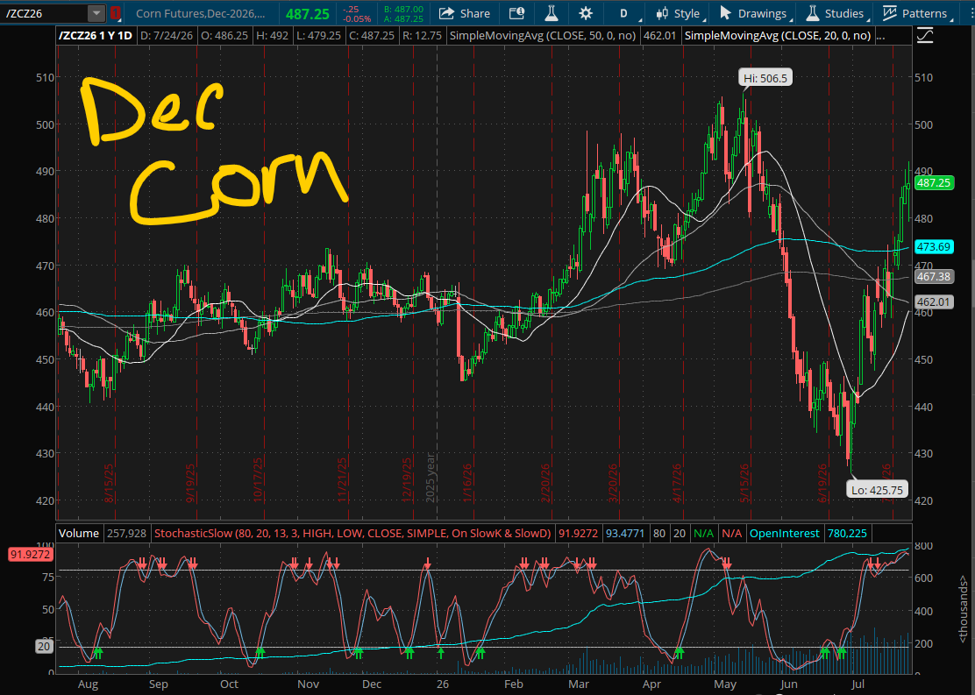
Dec26 Corn up 21.75 to $4.8375
Nov26 Beans up 15 to $11.9125
July27 Chi Wheat up 27 to $7.1025
Jul27 KC Wheat up 32.75 to $7.7925
Dec26 Cotton up 32 points at $0.8472/lb
Grains:
The August USDA report was a mixed bag, but corn came out as the clear bullish surprise. USDA increased old-crop corn exports by 75 million bushels, pulling 2025/26 ending stocks down to 1.945 billion bushels versus the trade expectation of 2.0 billion. For new crop, USDA raised planted acreage to 96.73 million acres but offset some of that bearish acreage news with a lower-than-expected yield estimate of 180.7 bu/acre. New-crop ending stocks were also cut to 1.653 billion bushels, below the trade estimate of 1.724 billion. The big question from here will be yield — with improved rainfall and favorable temperatures, there is still potential for the crop estimate to move higher as we get into September.

Soybeans were much quieter, with USDA's numbers generally falling in line with expectations. Planted acres were raised to 86.765 million and the yield estimate came in at 52.7 bu/acre, putting production at 4.519 billion bushels. Similar to corn, the next several weeks of weather and crop conditions will be important, as historically soybean yields have tended to increase from the August estimate when conditions hold steady or improve. Wheat was largely uneventful from a USDA standpoint, with production and demand estimates seeing only minor changes.


California is taking another step toward allowing E15 ethanol blends to be sold statewide, with the California Air Resources Board proposing regulations that would formally incorporate E15 into its gasoline framework. The proposal would allow fuel producers and importers to blend additional ethanol into E10, while maintaining seasonal vapor-pressure restrictions. California has been moving toward E15 as refinery closures have raised concerns about gasoline supply and higher prices.
From a corn and ethanol standpoint, the move is significant because California represents a potential 600–800 million gallon annual ethanol market. Expanding E15 access would create another meaningful outlet for U.S. ethanol at a time when the industry continues to look for additional demand. While the rulemaking still needs to work through the remaining regulatory process, California's move is a positive development for ethanol demand and, ultimately, corn demand.
Livestock:
Fat cattle finished the week on the defensive after starting out fairly steady. Nebraska cash trade landed around $228–$230/cwt live, roughly $2 lower than last week, with dressed trade mostly $362–$365. Futures took some heavier hits late in the week as fund selling and technical pressure weighed on the market. The big underlying story is still tight cattle supplies, which should continue to provide some support, but weaker cash trade and increased volatility have taken some of the steam out of the market in the short term.
Feeder cattle had a choppy week, finding some early support before turning lower into the end of the week. Most futures contracts saw losses as technical selling hit the market. Looking ahead, the potential reopening of the U.S.-Mexico cattle trade is something to keep an eye on, as additional feeder supplies could take some of the premium out of the market. Tight supplies are still a major bullish factor, but after the big run we've had, the feeder market is showing it can be pretty volatile.
Lean hogs were the steadier part of the livestock complex this week, although futures did soften toward the end of the week. Cash values have held up relatively well, with the national base hog price reaching around $97/cwt, while the CME Lean Hog Index remains in the mid-$95 range. Pork production is running slightly ahead of last week but still below year-ago levels. Overall, the cash market is giving hogs some support, but the futures market is showing a little more caution as we head into the next few weeks.
Weather:
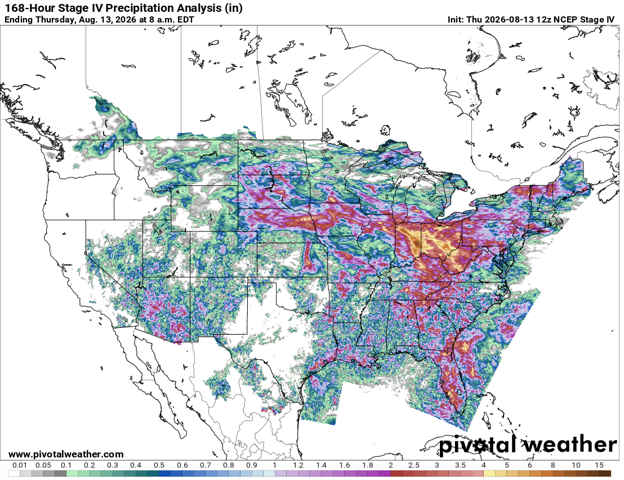
Overall, the last week has been favorable across most of the Corn Belt. We’ve seen some good rains move through, which has helped take some pressure off the crop, especially with cooler temperatures. There are still some pockets that have been wetter than they need to be, but for the most part, moisture has been positive as we head toward the final stretch of the growing season.
Looking ahead, the forecast continues to show more rain chances across much of the Corn Belt, with some areas potentially picking up another 1–3 inches over the next 7–10 days. Temperatures look manageable as well, with most of the Corn Belt generally seeing highs in the upper 70s to mid-80s.

Economy:
Inflation got a little more encouraging this week, with wholesale prices holding flat in July, according to the latest Producer Price Index report from the Bureau of Labor Statistics. Economists were expecting a 0.2% increase, so the unchanged reading was a positive surprise. Core PPI, which leaves out food and energy, rose just 0.2%, also coming in below expectations. On a year-over-year basis, wholesale prices are still up 4.7%, but the latest numbers suggest some of the inflation pressure that picked up earlier this year is starting to ease.
The details were fairly encouraging as well. Goods prices fell 0.7% during the month, helped by a 3.1% drop in energy prices and a 5.7% decline in gasoline. Food prices also fell 0.9%. Services prices increased 0.2%, although a 6.5% jump in portfolio management costs made that number look a little worse than it otherwise would have. The report follows Wednesday's consumer inflation data, which showed CPI rising only 0.1% in July. Core CPI was up 0.2% for the month and 2.5% from a year ago, putting it back around the level seen before the Iran war.
The big takeaway is that inflation appears to be cooling rather than accelerating, which is good news for consumers and gives the Federal Reserve a little more flexibility. Markets responded positively to the report, with stock futures higher and Treasury yields lower, while traders pulled back some of their expectations for a September rate hike. That said, inflation is still running above the Fed's 2% target, so the Fed isn't out of the woods yet. On the labor side, initial jobless claims also ticked higher last week to 209,000, up 9,000 from the previous week and above expectations. Overall, the latest data paints a picture of an economy that is slowing some but not falling apart, with inflation moving in the right direction and the labor market showing a few signs of cooling.
Something That Probably Means Nothing:
The Los Angeles Lakers just pulled off something remarkable in the sports world: they’re being sold again only about 14 months after the last sale. In June 2025, Mark Walter agreed to buy controlling interest in the Lakers from the Buss family at a $10 billion valuation. Now, Walter has agreed to sell the franchise to an ownership group led by former Disney CEO Bob Iger and investor Josh Kushner for a record $12.5 billion valuation, pending NBA approval.
Yes — you did that mental math correctly… $12.5 billion minus $10 billion equals $2.5 billion. The crazy part is the pace: the Lakers’ valuation increased by 25% in just 14 months. That’s roughly $179 million of added value every month, $5.9 million every day, or $246,000 every hour. Pretty incredible when you put it into those terms.
What makes it even more interesting is that this isn’t some struggling franchise being flipped after a turnaround — it’s the Lakers, one of the most recognizable sports brands in the world. The deal is another great example of how scarce, premium sports franchises have become their own type of asset class. When someone is willing to pay $12.5 billion for a basketball team just 14 months after another buyer paid $10 billion, it says a lot about how investors are viewing the long-term value of sports media rights, ticket revenue, sponsorships and global brand value.
Quote of the Week:
Volatility creates headlines, but discipline creates results.


Comments